What It's Like to Work With a Timelapse Photographer
Most people think timelapse is set-and-forget. You put a camera on a tripod, press a button, walk away, come back at the end of the day, and you've got your sequence. It's an understandable assumption - the finished result is a single unbroken clip, and the camera does look like it's been left alone for hours.
It isn't, and it hasn't. A timelapse that cuts cleanly into a finished film is the product of active management from start to finish: a considered brief, a properly planned shoot, constant attention on the day, and a specific post-production process that most clients don't know exists. When timelapse goes wrong, and it goes wrong often, it's almost always because it was treated like a locked-off camera job.
This is a short guide to how I work, what to expect at each stage, and what I need from you to make the finished sequence feel effortless.
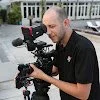
Managing a 3-axis timelapse over several hours.
Before the shoot
Timelapse is the one discipline where the brief does most of the heavy lifting. A ten-minute conversation at the start saves a day of problems later.
The things I need to know, in order:
What's the sequence for? A two-second cutaway in a corporate promo is a completely different shoot from a hero sequence that carries a minute of screen time. The end use dictates the frame interval, the duration, the camera angle, the overall look, whether I'm shooting one camera or two and whether the shot wants motion. A locked-off tripod, a programmed slider, or full three-axis motion control all have different considerations. Motion control isn't a default, and it isn't free; it's a specific creative decision that adds rig time, rehearsal, and cost, and it needs to earn its place in the sequence.
How long does the subject take? An event build that goes up in ninety minutes, a building site that runs for six months, a sunset that lasts forty minutes, and a star field that needs six hours of darkness are four different shoots with four different rigs. I'll ask more questions than you expect here, "roughly a day" is not enough.
The more specific you can be, the better. For the event, I need to know the build window, the crew size, and what the sequence is for in the finished film, that's a shoot I plan around the client's operation. For the sunset, I need the location, the purpose, and where it sits in the edit because that shoot is planned around the conditions, not the producer's schedule. Some subjects bend to you. Others don't bend to anyone, and the job is to be in the right place, rigged correctly, at the moment they happen.
Where is it, and what's the access? Power, weather exposure, public access, security, shade versus direct sun, the view I've been asked to frame versus the view I can actually achieve from the only spot I'm allowed to stand in. I'll usually want to either recce the location or see photographs of it from every angle before the day. Depending on the complexity and the scale of the shoot, a physical recce may be essential. I've flown to Scotland to spend an hour looking at a valley and flown back the same day, because the difference between a good recce and a guess is what separates a sequence that works from one that doesn't.
What's the deliverable? Final graded sequence, or raw stills for someone else to assemble? 4K, 6K, or a specific pixel-count crop for a particular edit timeline? Vertical or horizontal? Do I need to match a certain colour space? These small details decide how I shoot.
If the brief is tight and the location is clean, I can often confirm a timelapse off a single email. If either is complicated, expect a phone call. I'd much rather ask the awkward questions now than discover them on the day.
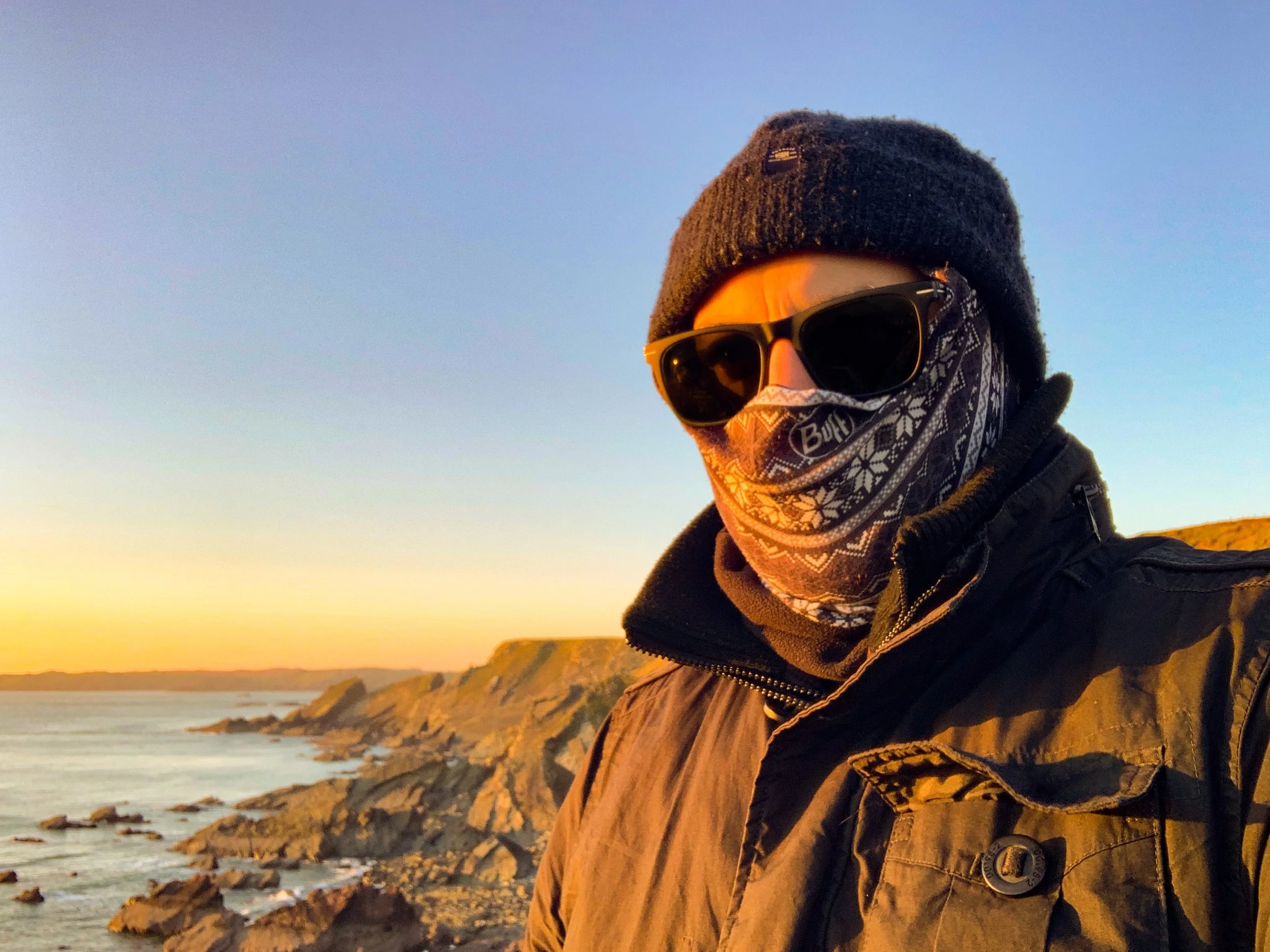
Shooting Timelapse can be very cold work.
On the day
The first thing worth understanding is that in most circumstances I am not leaving the camera. A timelapse isn't just a camera with an intervalometer attached to it; it's a live shoot that happens slowly. Light changes, clouds move, people wander into shot, batteries drain, condensation forms, focus drifts with temperature, and in any given hour there are three or four small decisions that need to be made to keep the sequence clean. I'm there for all of them. If I’m working in dying light, then I’m doing more than corrections per minute than most shooters are used to.
I work with a trusted camera assistant on most shoots of meaningful scale, that includes expedition work, anything running more than a couple of days, or any job where the complexity of the location or the brief means going solo isn't the safe call. Partly because a second pair of hands keeps the shoot supervised during a comfort break and keeps everything running safely. Partly because a lot of jobs want two camera angles in parallel, a wide and a tighter shot typically and that's genuinely twice the work, not a freebie. Smaller, contained shoots I'll often run on my own.
A few practical things worth knowing:
I'll arrive earlier than the start time you've given me. Thirty minutes for a simple setup, longer if the location is tricky or if I'm rigging motion control. If your build, event, or subject is supposed to start at 10:00, I'll be on site from 09:00 or 09.30 at least.
I'll want mains power if it's available, and I'll bring extension leads regardless. Where mains isn't an option such as in expedition work, remote sites or anywhere without a reliable socket, I'm running 95Wh V-lock batteries and 200W+ power banks, often in combination, to keep the cameras running cleanly across a full shoot. Power on a timelapse is more considered than people expect: a drop in voltage doesn't just kill the camera, it can end a sequence that's already six hours in. If everything goes dark, I need to have a backup option ready before the next frame is needed, so power if planned and never improvised.
It’s worth saying more broadly: a timelapse shoot typically needs as much kit as a normal shoot, if not more. Cameras, lenses, tripods, motion control rigs, power and cabling, weatherproofing, monitoring, and backups of everything. It travels in hard cases and fills a car.
Weather is always part of my calculations, not a surprise. My kit is weather-sealed, rain covers come out when a downpour is forecast, batteries get bagged and boxed, and the shot plan takes the conditions into account from the start. That means weather on a timelapse shoot is less of a live issue than on a conventional shoot, it's already been planned for. If conditions do change dramatically on the day, I won't pack up without a conversation. Rain changes a timelapse; it doesn't always ruin one. Some of the best sequences I've shot have come out of weather that looked like a disaster at the time.
I work around your operation, not the other way around. If the shoot is a product build, an event, a site visit, or anything where other people are the point, my job is to be invisible and stay out of the way. A lot of that is documentary instinct, most of my other work is as a DP on docs and branded content, where the camera only gets what it needs by not being noticed and it carries across directly. Clients often tell me they forgot I was there. That's the goal.
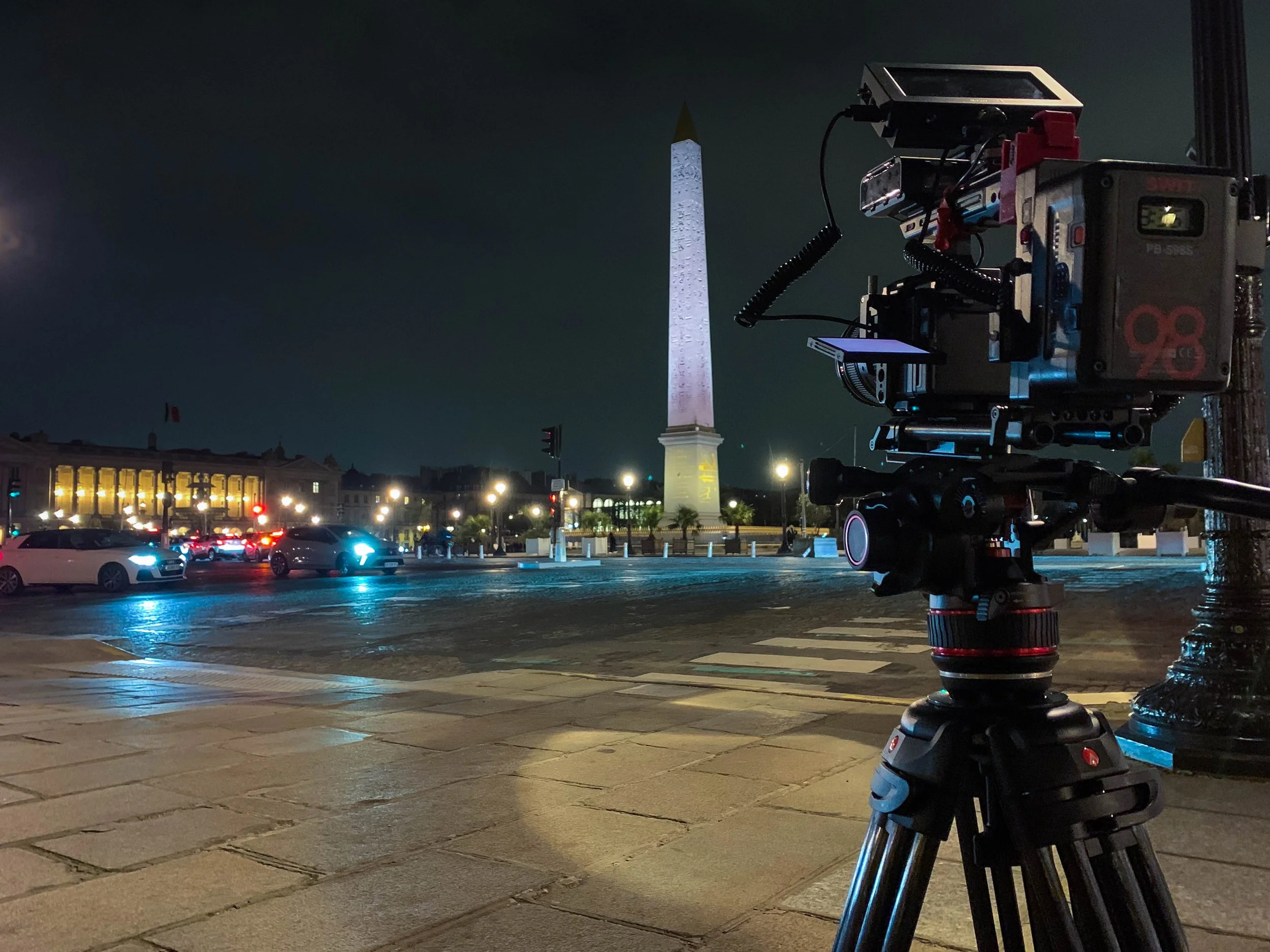
Extended rig for long exposure, night timelapse in Place de la Concorde, Paris.
After the shoot
This is the stage that surprises people most, and it's the stage where a timelapse is made or ruined.
Raw timelapse footage is not a finished sequence, in fact it’s pretty much unusable. What comes off the card is a folder of several hundred or several thousand stills, each one very slightly different in exposure from the last because the camera and the light don't move in perfect lockstep. Play those stills back untreated and you get flicker, the characteristic strobing effect that marks an amateur timelapse. Removing it requires processing the images through dedicated software, and it's the difference between a sequence that cuts into a professional film and one that doesn't.
Beyond deflickering, the stills need grading as a sequence, exporting at the correct resolution and frame rate, and delivering in a format that drops into the edit without friction. Depending on the shoot, I'll also do things like stabilisation passes, object removal where agreed, and cleanup of unwanted elements that have moved through shot.
Post is priced separately from the shoot day. This sometimes surprises clients who are used to commissioning video work where "one day on site" implies "finished deliverable." For timelapse it doesn't, and trying to absorb post into the shoot day tends to mean one of the two gets shortchanged.
A useful way to think about it: timelapse post is closer to how a stills photographer charges than how a DoP charges. A photographer charges for the shoot day and separately for the delivery of finished images, for the same reason. What comes off the card isn't directly usable, and handing a folder of raw stills to an editor is a week of headaches for them rather than an hour of work for the specialist who shot it.
A sunrise timelapse shot using the Holy Grail Method of exposure adjusting.
What it costs
Timelapse pricing is bespoke rather than a fixed day rate, because the variables matter. A one-camera, one-location, mains-powered, half-day corporate build is a different proposition from a three-camera expedition shoot that involves hiking kit to a ridge and running self-powered for forty-eight hours, and the pricing reflects that.
What I'll always do is give you a clear, itemised quote before the shoot; kit, day rates, crew, per diems, post, any specific extras so you know exactly what you're commissioning and why. Nothing is bundled into a vague "project rate" and surprise-invoiced later.
Invoicing is Net-14 by default. Longer terms are negotiable on first jobs with an agency. If it’s a very long project, that requires a upfront deposit.
How to brief me
The easiest way to get a fast, useful quote is to send me four things in your first email: what the subject is, how long it takes, where it's happening, and what you need the sequence to do in the finished film. If you've got a reference like a timelapse you've seen somewhere and liked send that too. It's often faster than a paragraph of description.
From there I can usually come back within a day with a plan, a quote, and any questions I need answered to lock the shoot in.
If it's more complicated than that, we'll get on a call. A ten-minute conversation usually saves a week of email.
Timelapse rewards the prepared. Everything in this guide exists so that by the time we're on site, the shoot will run smoothly.