Shooting from Moving Vehicles: A DoP's Guide to RHIBs, Motorcycles, Helicopters and 4x4s
The Sydney to Hobart Race is one of the most spectacular annual events on the planet. I'm in a RHIB, surrounded by 1,500 boats. Competitors, spectators, chase vessels; all funnelling toward Sydney Heads at once. The sea state is like nothing I’ve ever seen before or since and I’ve sailed open oceans and turbulent straits.
The RHIB is pitching at least 120 degrees off flat. Bow skyward, then hull skyward, waves hitting from every angle simultaneously. I'm not operating a camera. I'm surviving, holding on for dear life and trying to keep the camera dry. It might be in a rain cover but one rogue wave and that’s £10K in the drink.
I got almost nothing usable that day. There simply wasn’t a safe moment to focus on getting a shot.
Shooting from moving platforms will humble you before it rewards you, and anyone who tells you otherwise hasn't done enough of it. It can be the most exhilarating, frightening, gruelling and rewarding element of any shoot and all of those moments can happen within minutes of each other.
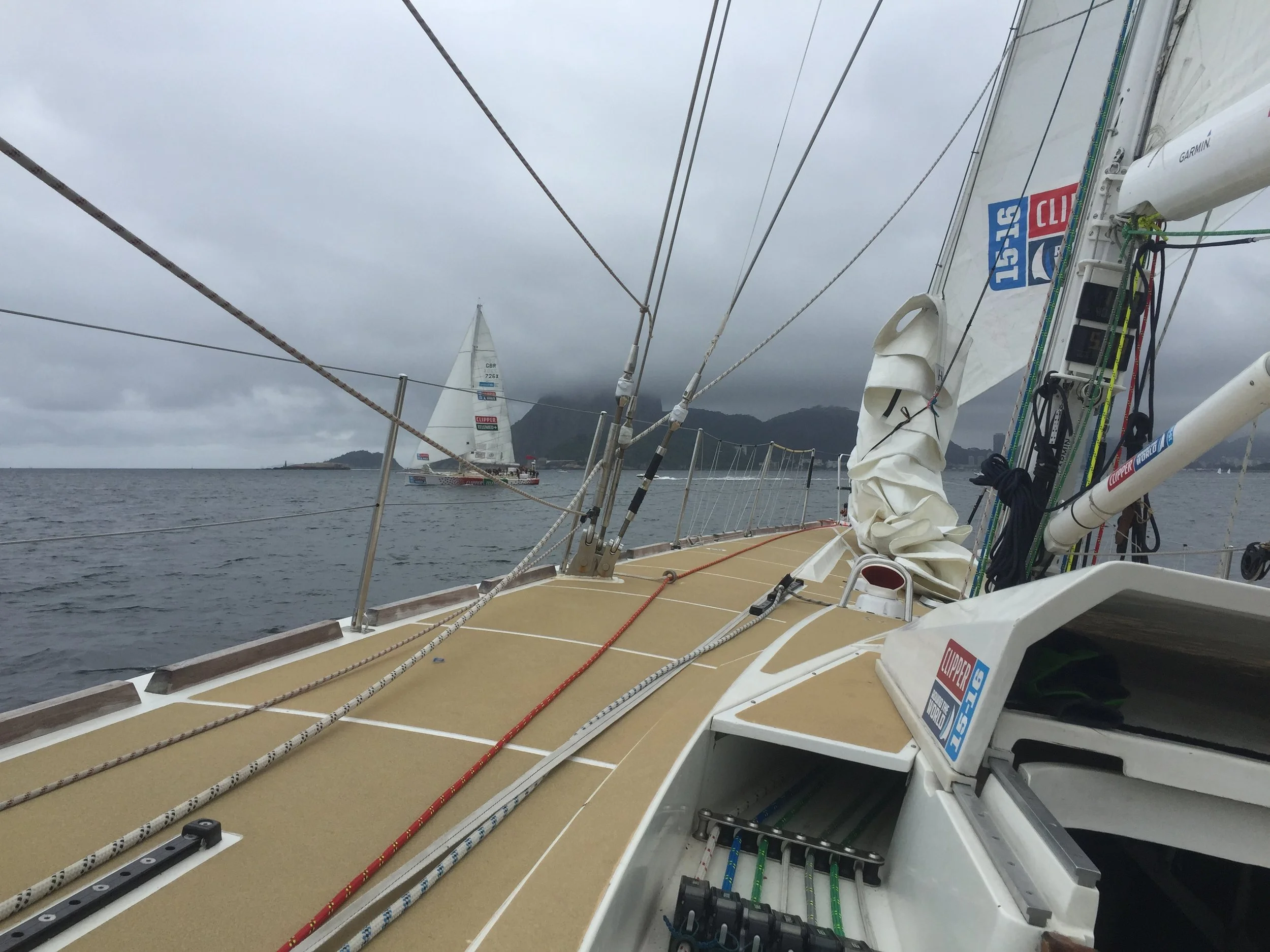
Shooting from onboard a Clipper 70.
Regardless of platform, there are a few things they all share.
Vibration. Your biggest nemesis. Our bodies are naturally gyrostabilised. Your arms and legs do a remarkable job of absorbing movement, but the real winners are your eyes and the way your brain processes what they're seeing. Whether you're walking, running, or hanging off the back of a jet ski, you perceive almost no up-and-down motion. Your camera perceives everything. Every sway, every micro-vibration transmitted through the hull or the frame. Even with built-in optical stabilisation, you're only buying yourself so much. The rest comes down to technique and how well you can operate under pressure.
Framing. Be loose. Don't be prescriptive. In most of these environments you don't get a second take, and chasing an overly specific composition will cost you the shot entirely. Ask yourself: what do I actually need to capture? Get that first. Then, if the moment allows, go for the close-up or the more dynamic frame. Trying to operate as you would on solid ground will exhaust you and leave you with very little.
Pre-roll everything. At speed, distances are deceptive and things approach faster than you anticipate. The best habit I've developed is to roll early and keep rolling long after the moment has passed. Give the editor frame handles. Give them options. You almost certainly won't be coming back for another pass.
The driver is the most important person on the platform. Not you. There may also be a photographer, a director, a radio operator, but what you're capturing is genuinely the least critical thing happening on that vehicle. The pilot or driver is keeping everyone alive. If they say no to an approach, a speed, a distance, that's the end of the conversation. It's better to come back with less footage than to not come back at all.
Most of the RHIB and motorcycle pilots I've worked with have been former police or military. One was a Royal Marine, and the things he could make a RHIB do seemed physically impossible even as I was experiencing them firsthand. These people know exactly what they're doing. Trust them implicitly, and you'll be surprised what they make possible.
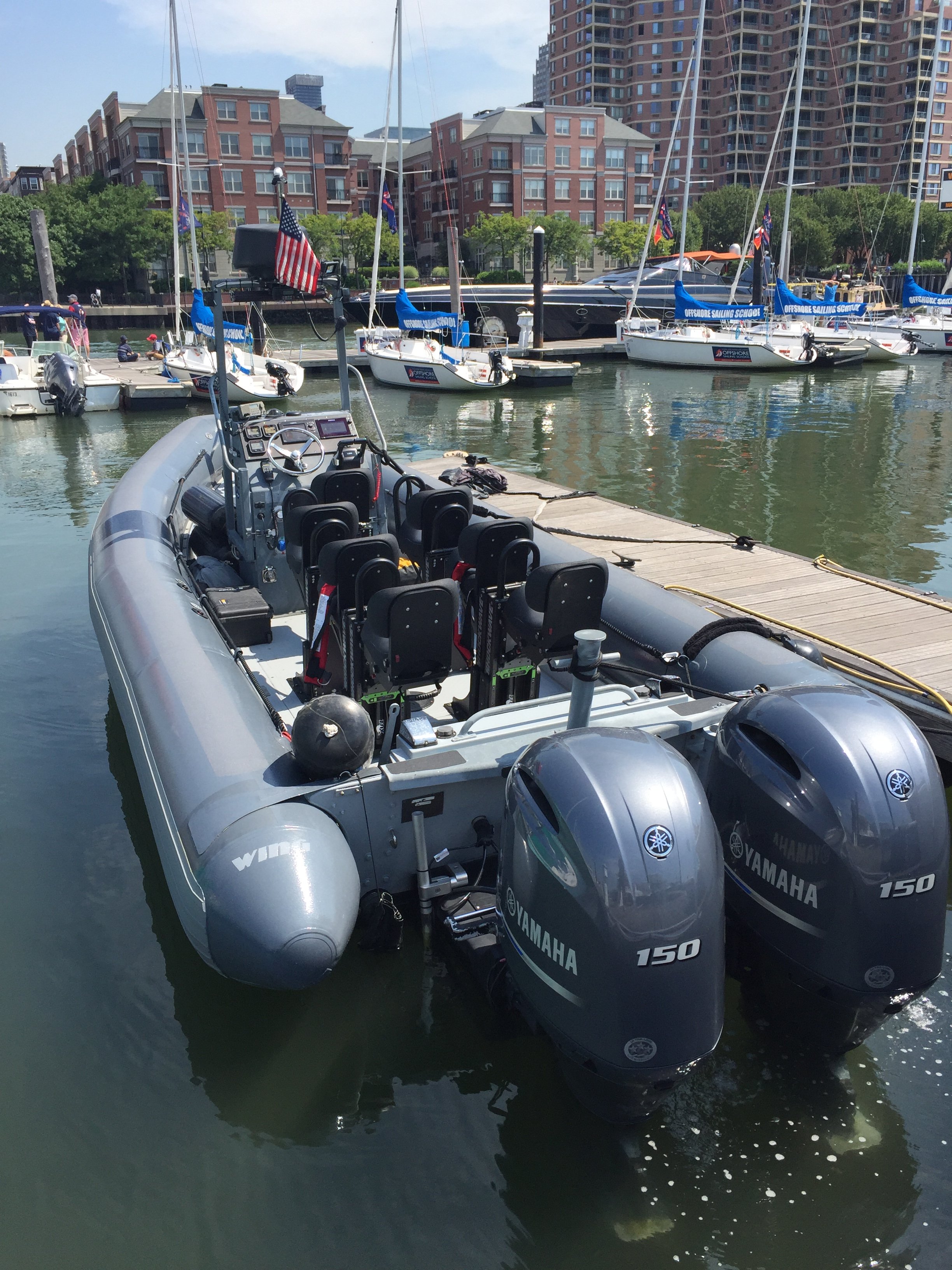
A top end chase boat. Gimballed seats and 300 horsepower.
RHIB
Probably the most dynamic and constantly changing platform you'll ever shoot from. A RHIB is never doing just one thing. You're on water, so at low speed the boat goes where the water wants, and at high speed the bow rises and bounces across the wavelets. Everything is in constant motion and none of it is predictable.
First thing to know: don't sit down if you want to be able to walk the next day. Yes, there are seats, but they're really for perching on between shots. Think of riding a RHIB like riding a horse. You need a slight squat, knees bent and working as shock absorbers, countering the waves continuously. Keep your elbows tucked tight to your chest and use your eye socket as a third point of contact with the camera. It sounds uncomfortable because it is, but it's the only way to get stable footage.
Leave the gimbal on shore. You might have seen larger productions using technocrane and gimbal-mounted cameras at sea and assumed an RS3 Pro or a Ronin 2 would do the job. It won't, for several reasons. Calibrating and balancing a gimbal on land means nothing once you're on open water; the sensors simply can't cope and will fight you constantly. You also can't keep a gimbal tucked close to your body, which puts enormous strain on your arms over a long shoot. Rain jackets protect cameras; they don't protect gimbals, and even if no water visibly gets in, salt air will start corroding the internals immediately. And those large gimbal rigs you've seen on big productions? They're typically travelling at 10 to 15 knots, which looks dramatic on screen but is only around 17mph. The chase boat on the Clipper Race had to run at 40 knots to stay ahead of the fleet at full sail. That's closer to 46mph. No handheld gimbal is built for that.
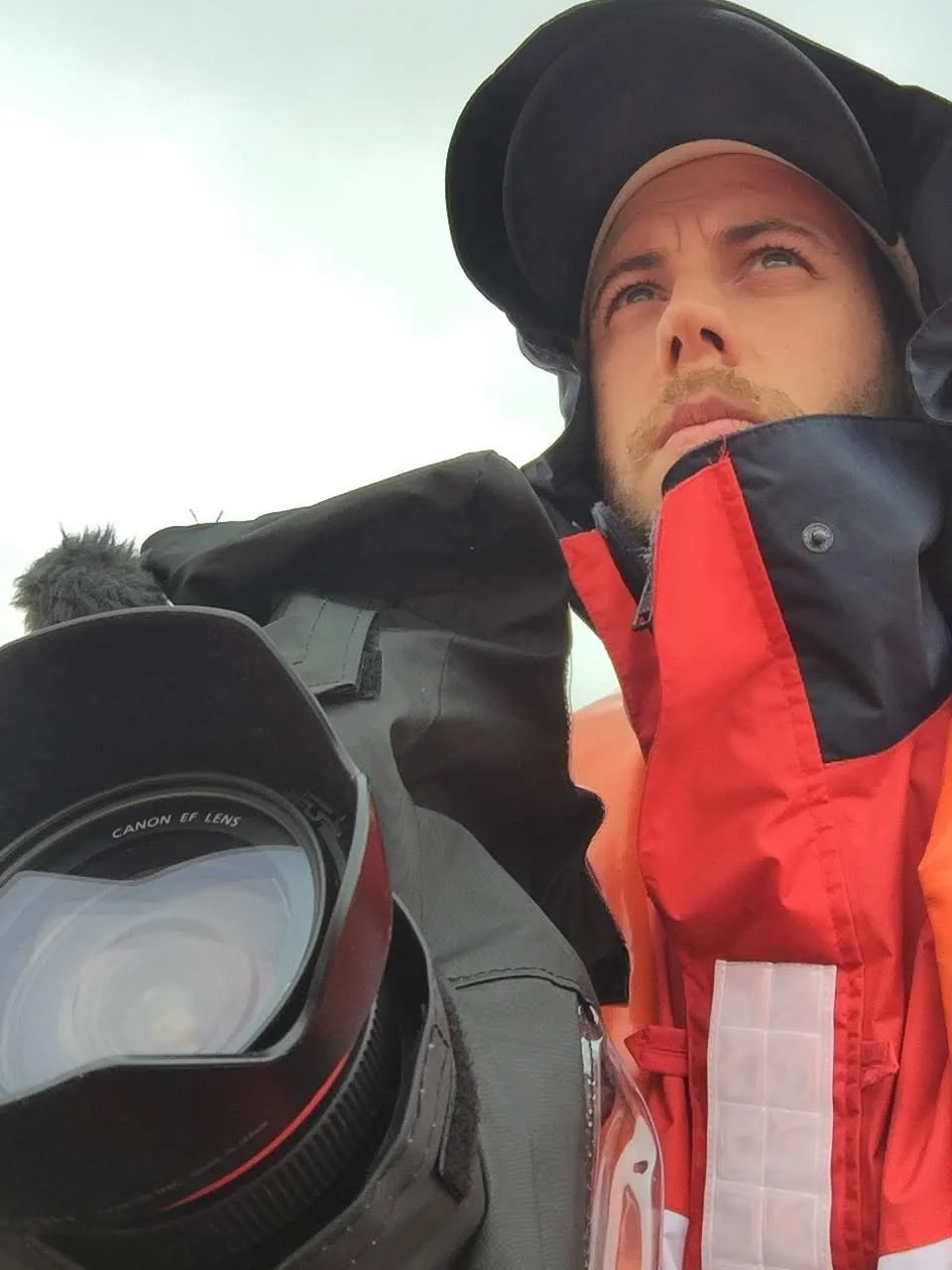
Shooting from a RHIB in the North Sea
Communication is everything. The pilot is the person who puts you in position, so be clear about what you need. If you want sweeping arcs or moving shots, brief them before you leave the dock so they can plan it safely. How they get you into position is entirely their call, not yours.
One thing that catches people out: being on a RHIB means the whole crew needs to be watching in 360 degrees at all times. Large vessels are not as visible as you'd think. Tankers and ferries travel quickly and can be on you before you've registered them, and you are absolutely not winning that encounter. Calling out hazards is everyone's responsibility. If the whole crew does it, you're exponentially safer.
Protect your camera like your livelihood depends on it, because it does. Always shoot with a rain jacket on the body, preferably one that doesn't trap condensation. When you're not shooting, the camera needs to be somewhere secure. A Peli case works well, but a large cool box strapped down near the helm is even better. It will absorb impact if the RHIB hits a large wave hard, and it will keep the camera from becoming a projectile if the pilot has to brake suddenly, which is exactly when things get swamped.
Treat a RHIB with respect and it will give you visuals that almost nothing else can.
Helicopter
Helicopters aren't used as much as they once were. Drones have taken over a large part of the market, and for good reason. But drones are only capable of so much. If you need shots above 120 metres, over restricted airspace, or at speeds no drone can match, a helicopter is still the only answer.
There are two ways a helicopter can be configured for camera work. The first is a gyroscopic camera system mounted to the underside of the aircraft, operated by a specialist while you or a director sit in the back calling shots. The second is the side door open, harness on, legs dangling approach. Which one you use depends on the needs of the production and the budget. If you need super-stable shots or serious telephoto reach, the gyro system is the only way to achieve it. Those systems are genuinely extraordinary pieces of engineering, and working with one feels less like being on a shoot and more like being in a mobile studio. The whole crew is on comms, you're out of the elements, and the footage almost operates itself.
The side door approach is a different experience entirely. Every time I've sat harnessed at an open door, watching the ground slide past far below as the chopper flies low over countryside, I've had Fortunate Son playing in my head. It just has that feeling.
It shouldn't need saying, but the pilot will not take off unless you are harnessed in. Full stop. I'd also strongly recommend sunglasses or goggles. At speed, insects become a genuine occupational hazard.
When it comes to operating, you have two options. Handheld, in which case you hold on, keep your arms braced tight to your body, and bungee tie the camera to your person as a backup. Tie off to the top handle or somewhere structurally solid, not anywhere that could shear away from the body. Alternatively, use a gimbal with a gimbal ring for a more balanced setup you can rest across your knees. This frees you to focus on framing and working with the movement of the aircraft rather than fighting it. Either way, harness the gimbal to the aircraft as well. There are plenty of tie-off points.
Unlike a RHIB, you can be genuinely prescriptive when shooting from a helicopter. A skilled pilot can achieve almost anything you ask for. The key is to communicate positively and concisely. "Bank left, rise slowly, gentle hold, call clear to move off." The fewer words the better. Helicopters can move fast, decelerate hard, and drop into a hover, which gives you an enormous range of shot options if you brief clearly.
One technical note worth flagging: set your shutter speed slightly higher than you normally would. The speed of the aircraft introduces motion blur that your standard 180-degree rule won't account for. I typically find 1/100th as a minimum cuts excessive smearing, but don't be afraid to push higher and recover exposure through ISO. Set your aperture around f/8 as well. You're in a helicopter. Shallow depth of field is irrelevant, and a closed-down aperture helps manage motion smearing across the frame.
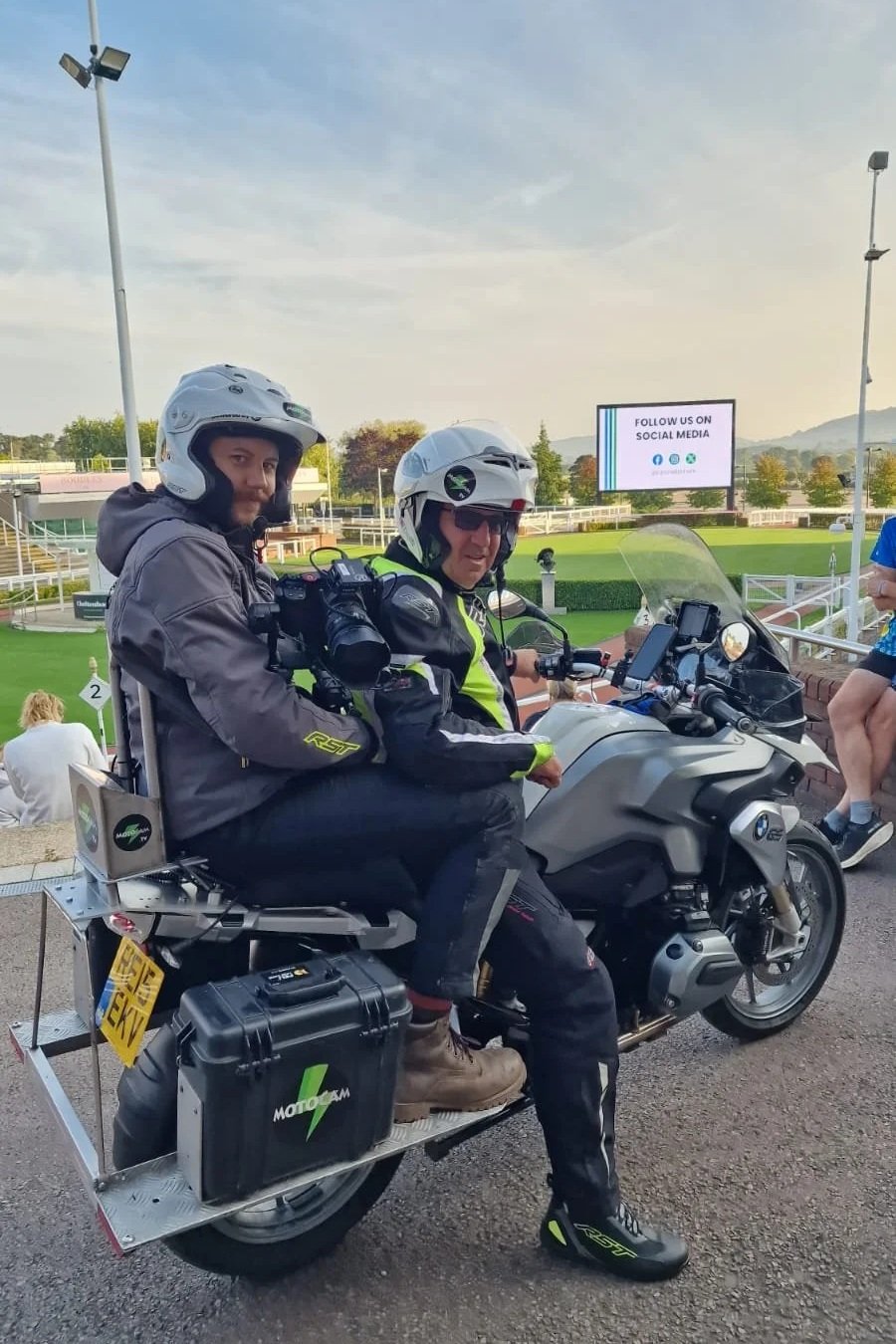
Me riding shotgun with Kevin from Motocam for Run Cheltenham
Motorcycles
Motorcycles are simultaneously the most exhilarating and most terrifying platform you'll shoot from. Do it once and you'll be addicted.
Most of the time you're facing backwards, travelling at anywhere between 20 and 70mph. In an urban environment, say on a marathon or cycling event, this will attract some very confused looks from bystanders. The alternative is to stand facing forward, shooting over the pilot's shoulder. This is only possible in certain situations and requires a very confident operator and a deeply trusting relationship with the pilot.
Communication has to be constant. You're telling the pilot what you're getting, whether you're still rolling, and when to move on. They're telling you what's coming up ahead, which direction they're turning, and when the bike is about to bank. That last one matters more than it might seem. When the bike leans into a turn you need to counterbalance with your body to maintain the shot and, critically, to keep the bike's weight distribution manageable for the pilot. If the G-forces in a turn get too much, give up on the shot. Focus on not losing the camera and keeping your balance. The shot isn't worth it.
The good news is that motorcycles give you something most other platforms don't: a second chance. The pilot can slow down, let the cyclists or athletes catch up, and you can go again. Multiple angles of the same moment become genuinely achievable, which makes bikes one of the most dynamic and editable platforms to shoot from.
For kit, you have two realistic options: a large shoulder-mounted camera such as an FX9 or a broadcast body, or a small camera on a capable gimbal. This is where mid-size cameras like the FX6 actually create more problems than they solve. They're not small enough to sit comfortably on a gimbal in a confined space, and not heavy enough to shoulder with any real stability. Trying to use an FX6 the way it's designed to be used on a moving bike introduces jitter that you simply cannot clean up in post. Go small with a capable gimbal like an RS3 Pro, or go large and shoulder it properly with a viewfinder. There's no comfortable middle ground.
Whatever you're shooting on, put your most versatile zoom on it and leave it there. My go-to is the Sigma 28-105mm, which covers everything from a wide establishing shot to a decent close-up without touching the lens. The last thing you want to be doing is changing glass at 40mph.
One technical note on stabilisation: set it to its lightest mode. It's going to be working hard, and if you push it too aggressively you'll start seeing stabilisation artefacts in the footage, warping and skewing that can't be fixed in the grade.
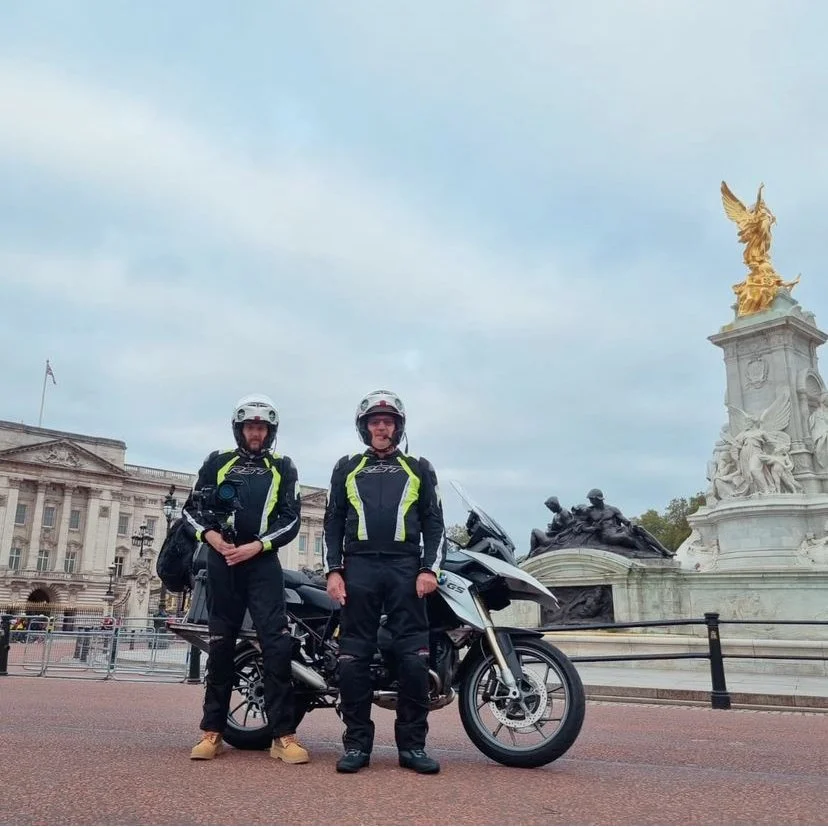
Outside Buckingham Palace as part of the Prince’s Trust Palace to Palace.
Before you get on the bike, make sure you're properly kitted out. Helmet with comms built in, appropriate protective clothing, the full works. If any production asks you to get on a bike without this, decline. It's not worth the risk. And even if everything goes smoothly, windburn at speed is genuinely unpleasant, and trying to operate while freezing is its own kind of miserable.
Unlike a helicopter, you do not want a harness on a motorcycle. It might seem like the safer option but it isn't. If the bike goes down, a harness takes you with it. You want to be able to separate from the bike should the worst happen, or at the very least not be dragged along with it. Keep yourself free. Your protective clothing is doing the job the harness would otherwise seem to offer.
Take everything you'll need with you. Extra cards, batteries, lens cleaning kit. Side boxes can carry the bulk of it, but keep essentials on your person in easily accessible pockets. You need to be able to swap a battery or change a card in a confined space, at speed, with a firm grip on everything. Take your time, or ask the pilot to slow down. The last thing you want is a card or battery disappearing into the asphalt never to be seen again.
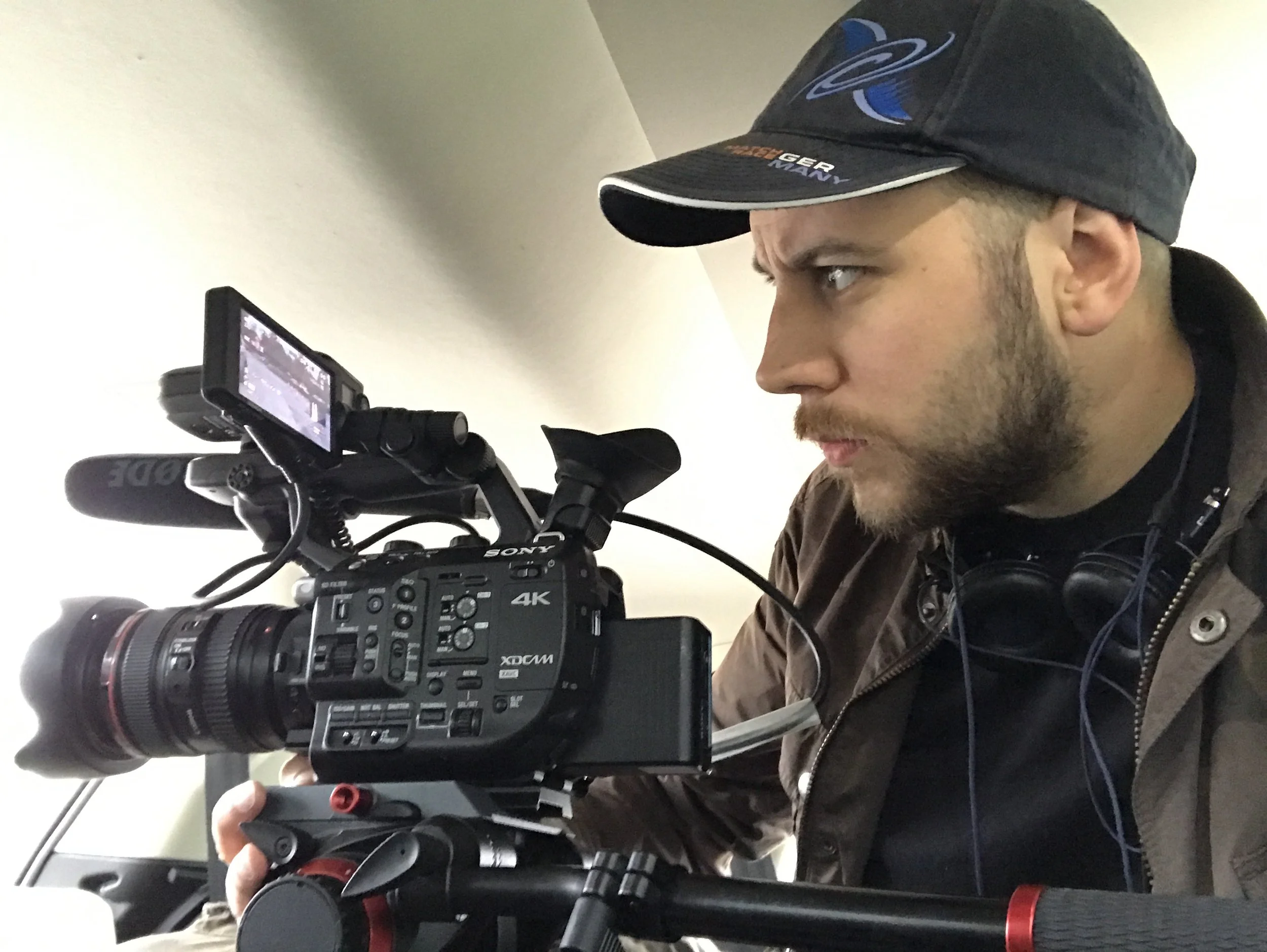
Shooting a cycling race out of the back of a Land Rover.
4x4s
This may surprise you, but shooting from a 4x4 is my least favourite platform.
Firstly, it's cramped. The typical setup involves a tripod in the boot, tailgate closed, rear window open. You'll be hunched over the camera with very little room to move, so prepare for a sore neck by the end of the day. You're essentially limited to one angle, shooting backwards through a fairly tight frame, which means a longer lens and more distance between you and your subject is often a better approach than trying to get up close. The added reach gives you more shot options and the compression of a longer focal length creates a greater sense of speed and motion. That said, tracking a car tightly around a circuit can deliver some genuinely dynamic results, but it requires you to work within the constraints of the vehicle rather than against them.
When it comes to settings, shoot slightly wider than your final delivery format and set stabilisation to a mid-strength setting. 4x4s generate a lot of micro-vibration, and going in tight amplifies this. You'll see smearing and jitter that's difficult to catch in the viewfinder or on a monitor but becomes very apparent in the edit. If you need tighter shots, switch to a small gimbal setup but keep yourself and the rig inside the frame of the vehicle. If the budget allows, a shock-absorbing camera rig mounted to the exterior of the vehicle is a significantly better solution for that kind of work.
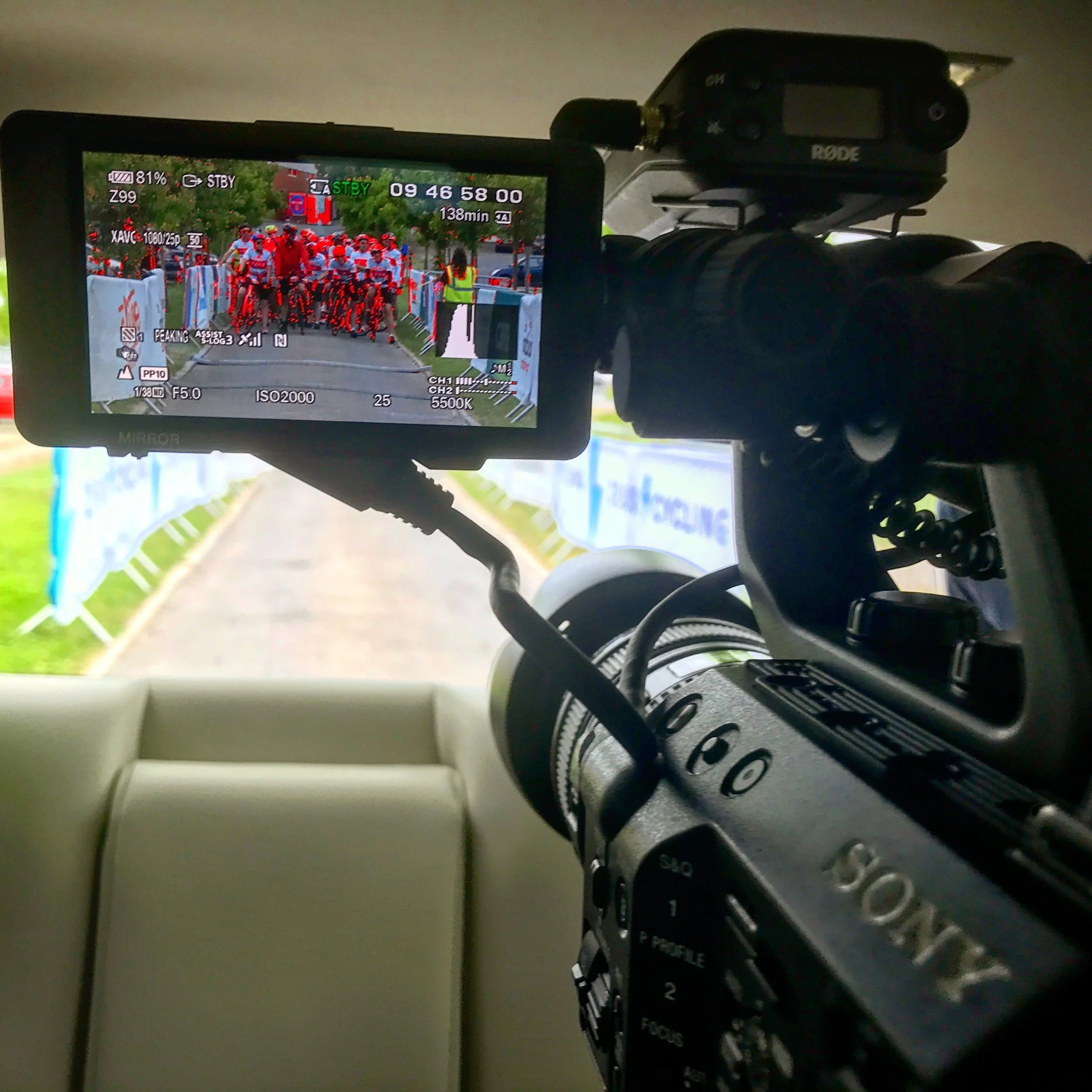
Shooting out of the back of an Evoque, not ideal but it works.
On safety: harness in, and sandbag the tripod down. 4x4s are more unstable than they feel, even on a flat surface. A turn that's slightly too tight will throw both you and the camera sideways with very little warning. I've seen operators shooting with the tailgate down, hanging out the back with a gimbal. Don't do this. It's an unnecessary risk to you, to your camera, and to whoever you're filming. A harness is there to keep you safely inside the vehicle. Used incorrectly it becomes the thing that drags you or injures you, not the thing that saves you.
Communication matters here as it does on every platform, but there's less pressure to be terse about it. The nature of 4x4 work generally allows more time to brief the driver and relay instructions. If you can't speak to the driver directly, passing instructions through a director works fine. One thing worth remembering: you don't need to be going fast for the footage to look fast. Thirty miles per hour on a tight telephoto shot reads as genuinely quick on screen, gives you more time to frame and react, and keeps everyone in the back from being thrown around.
Of all the platforms in this blog, a 4x4 is the most forgiving. You're inside a vehicle, relatively protected, with time to think and communicate. Even if you've never shot from a moving vehicle before, this is where to start.
Shooting on Lake Constance or Bodensee in Germany.
Making It Work
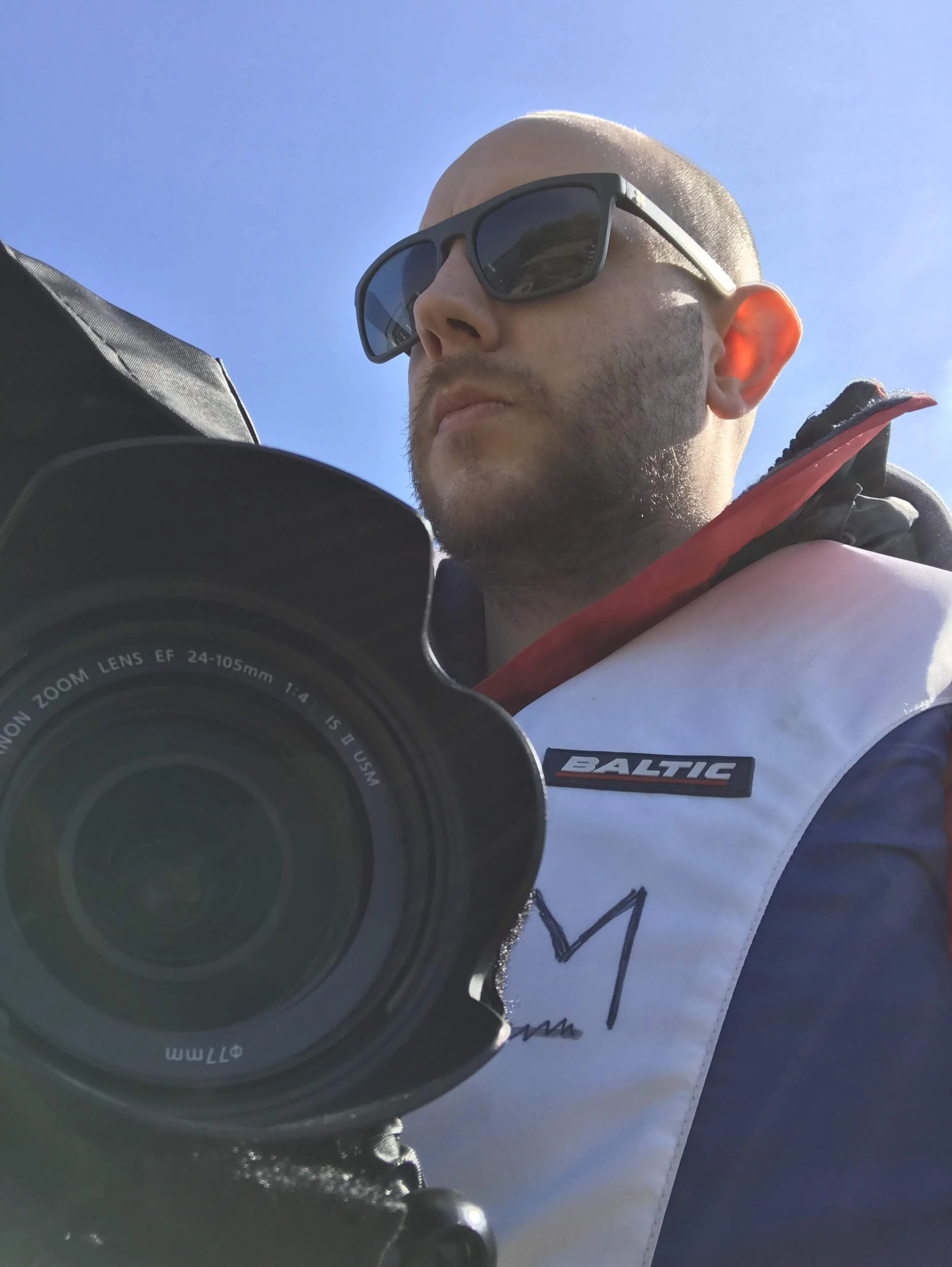
Regardless of platform, the most important qualities you can bring are flexibility and ease of use. Stabilisation, while helpful, is far less critical than you might think. Some of my best vehicle footage was shot on a C300 with a 24-105mm f/4, with nothing more than the lens IS doing any work. Set your camera up to be as uncomplicated as possible. Fewer variables means fewer things to worry about when everything else is in motion. Bigger batteries, large memory cards, and a clean simple menu layout are your friends. Depending on the circumstances, it may also be worth using a body you're prepared to sacrifice rather than risking your primary camera.
More important than the camera is how you prepare yourself. Dress appropriately for the platform. Biker gear on motorcycles, foulies on a RHIB. It might be 25 degrees and sunny on the dock, but the moment you're at speed, out at sea, or taking spray, the temperature drops fast. Cold, wet, and miserable is no state to be operating in.
Safety must be your absolute priority. Don't take risks. Don't do anything stupid. I've seen operators bragging about hanging off the helm posts of a RHIB with one foot on the inflatable hull just to get a shot. It's reckless, and in an unforeseen moment the consequences are severe. Before any camera is set up or anyone steps onboard, a proper safety brief must happen. Everyone involved needs to understand the scenario, know their role, and be prepared for as many eventualities as possible. No shot is worth a life.
When done properly, shooting from vehicles produces imagery that drones and tripod follow shots simply cannot replicate. They put you inside the action, from angles that very few people ever experience, which is precisely what makes the sequences so compelling. Being alongside a yacht in a chase boat means you see the crew working the deck, hear the halyards clanging and the sails filling, feel the water rushing past the hull. A drone shot of the same yacht would be striking, but it would show the boat in context rather than putting you in it. The same is true of motorcycles. Get alongside an athlete on a bike and you see the exertion in their face, the concentration, the effort. That's not available from the air.
Each platform excels at something different. Learning to shoot from all of them ultimately means learning to tell a story from anywhere.
Vehicle shooting is one of my favourite parts of the job, even when the sea is trying to kill me. If you've got a project that needs this kind of coverage, I'd love to hear about it.